
Key Takeaways
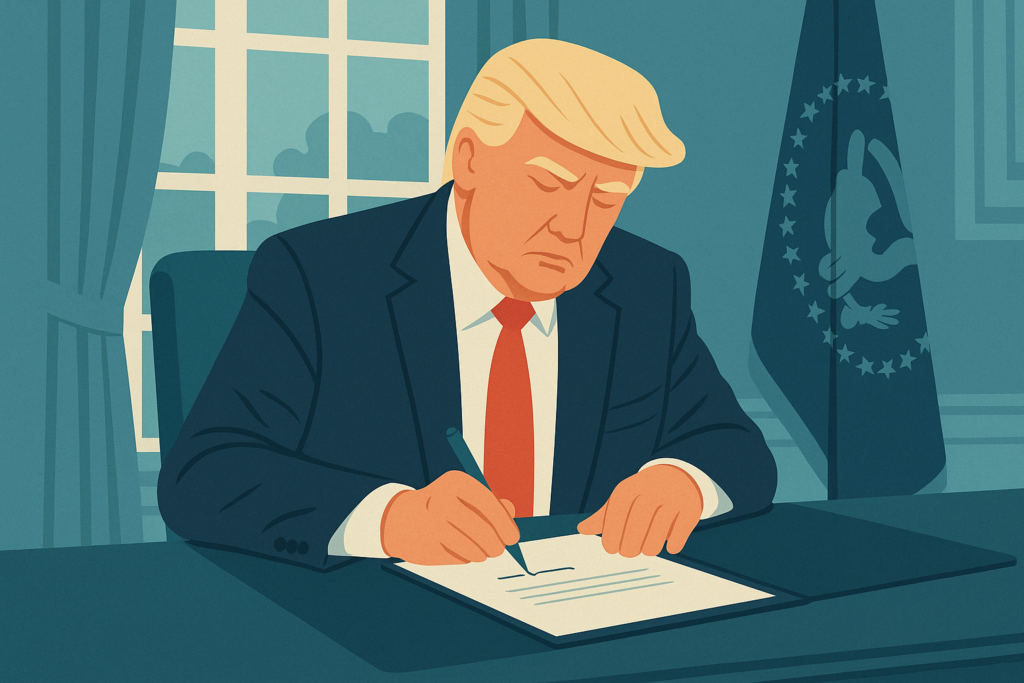
- President Trump plans to sign an executive order limiting state AI regulations.
- The order aims to create a unified national AI policy.
- Bipartisan opposition exists, citing federal overreach and the need for local protections.
Trump’s Executive Order on AI
President Donald Trump announced plans to sign an executive order aiming to limit states from creating their own AI regulations. He emphasized the need for a single national rulebook, arguing that multiple state laws could hinder the U.S.’s leadership in AI development.
Opposition to the Order
The proposal has met with significant bipartisan resistance. Many argue that states should retain the right to regulate AI to protect their citizens. Notable opposition includes Rep. Marjorie Taylor Greene and Gov. Ron DeSantis, who stress the importance of federalism and local governance.
Silicon Valley’s Influence
Silicon Valley figures, such as OpenAI’s Greg Brockman, support the executive order, fearing that a patchwork of state laws could stifle innovation. The tech industry’s lobbying power has been instrumental in shaping federal AI policy.
Potential Consequences
Critics warn that overriding state laws could have negative consequences. Concerns include the potential for AI to cause harm without adequate regulation, as well as the economic and cultural impacts of AI technology.
FAQ
Why is there opposition to Trump’s executive order on AI?
Opposition stems from concerns about federal overreach and the loss of states’ rights to protect their citizens through local AI regulations.
What does the executive order propose?
The order seeks to create a national AI policy, challenge state laws in court, and establish an “AI Litigation Task Force.”
Who supports the executive order?
Support comes from Silicon Valley leaders who believe that a unified national policy will prevent a fragmented regulatory landscape.
Closing Summary
Trump’s proposed executive order on AI regulation highlights the tension between federal and state governance. Businesses developing AI technologies must navigate these regulatory landscapes carefully, balancing innovation with compliance and ethical considerations.
Source: ‘ONE RULE’: Trump says he’ll sign an executive order blocking state AI laws despite bipartisan pushback – techcrunch.com