
Key Takeaways
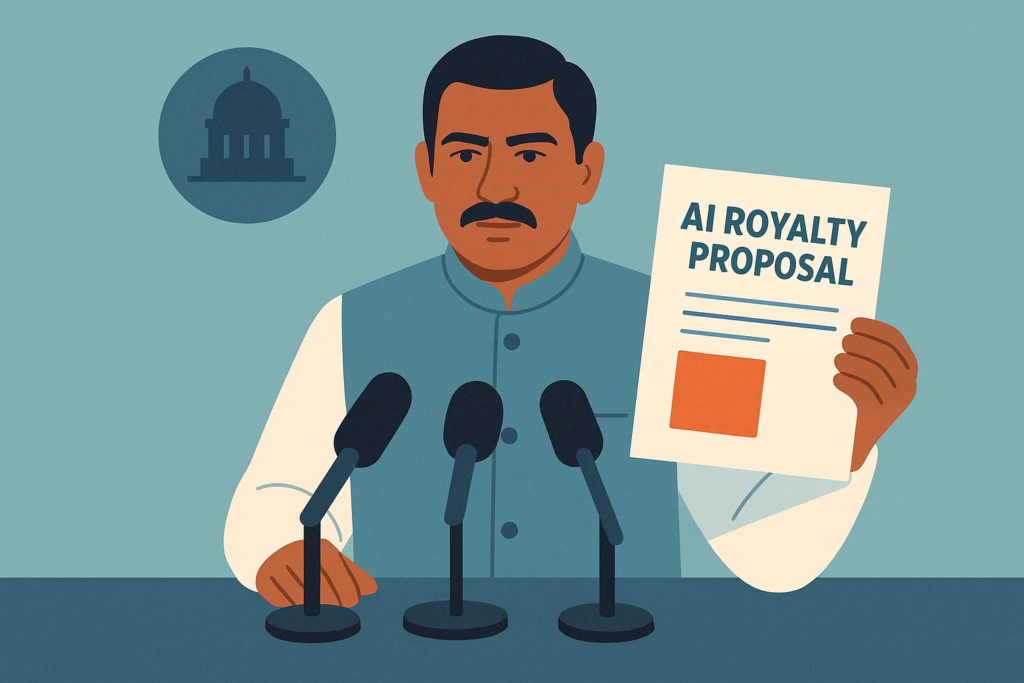
- India proposes a mandatory royalty system for AI companies using copyrighted content.
- The proposal includes a new collecting body to distribute royalties to creators.
- India’s approach contrasts with ongoing debates in the U.S. and EU over AI training and fair use.
- Industry bodies express concerns about potential impacts on innovation.
India’s AI Royalty Proposal
India has introduced a proposal requiring AI companies to pay royalties when using copyrighted content for training models. This initiative aims to ensure creators are compensated, addressing global concerns about AI training practices.
The Department for Promotion of Industry and Internal Trade suggests a “mandatory blanket license” allowing AI access to copyrighted works in exchange for royalties. This approach seeks to reduce compliance costs while ensuring fair compensation for rights holders.
Global Context and Legal Uncertainty
India’s proposal emerges amid global legal debates over AI training on copyrighted material. In the U.S. and Europe, courts and regulators are still determining the legality of such practices.
Unlike these regions, India’s proposal offers an interventionist approach, granting AI firms automatic access to copyrighted content with mandatory payments. This could potentially avoid years of legal uncertainty.
Industry Reactions and Concerns
Not all stakeholders support India’s proposal. Nasscom, representing tech firms like Google and Microsoft, argues for a text-and-data-mining exception, allowing AI training on lawfully accessed content. They warn that mandatory licensing could hinder innovation.
The Business Software Alliance also suggests a text-and-data-mining exception, highlighting risks of limiting AI models to smaller data sets, which could affect model quality.
Next Steps
The Indian government has opened the proposal for public consultation, inviting feedback from companies and stakeholders. After this period, the committee will finalize recommendations before government consideration.
FAQ
What is India’s proposal for AI companies?
India proposes a system requiring AI companies to pay royalties for using copyrighted content in model training, aiming to compensate creators.
How does India’s proposal differ from other regions?
India’s approach is more interventionist, offering automatic access to copyrighted content with mandatory payments, unlike ongoing debates in the U.S. and EU.
What are the concerns from industry bodies?
Industry bodies like Nasscom and the Business Software Alliance express concerns that mandatory licensing could hinder innovation and suggest alternatives like a text-and-data-mining exception.
Conclusion
For businesses developing software or systems, understanding regulatory changes like India’s proposal is crucial. It highlights the importance of balancing innovation with compliance and creator compensation.
Source: India proposes charging OpenAI, Google for training AI on copyrighted content – techcrunch.com