Key Takeaways
- AgiBot is a Shanghai-based startup using AI to train robots for manufacturing.
- The system combines teleoperation and reinforcement learning.
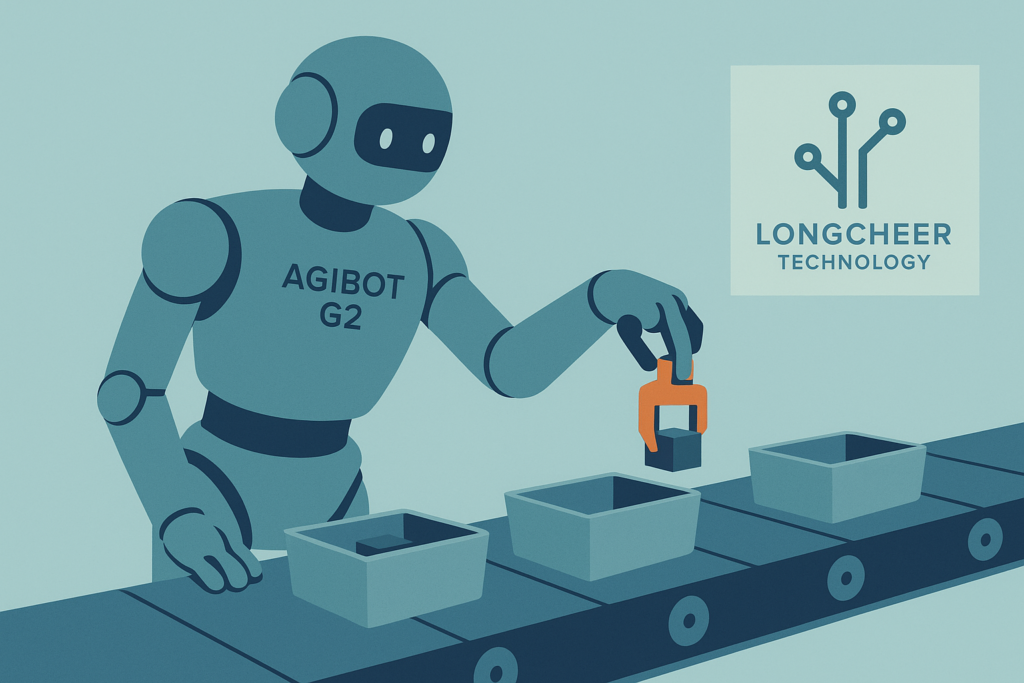
- Robots are tested at Longcheer Technology’s production line.
- AgiBot’s approach may increase productivity and change job roles.
AgiBot’s Innovative Approach
AgiBot, based in Shanghai, is pioneering a method to train robots for manufacturing tasks using a combination of teleoperation and reinforcement learning. This approach is currently being tested at Longcheer Technology, a company known for manufacturing smartphones and other electronic gadgets.
The Role of AI in Training
The robots developed by AgiBot are designed to learn tasks through human guidance and real-world practice. This method allows robots to handle tasks that do not involve complex manipulation, such as placing components on a production line.
Rapid Learning Capabilities
AgiBot’s system, called Real-World Reinforcement Learning, can train a robot to perform a new task in about ten minutes. This rapid learning is crucial as production lines frequently change, and robots need to adapt quickly.
Impact on Manufacturing
The integration of AI in manufacturing is expected to boost productivity and alter job roles. While some jobs may disappear, new opportunities could arise as robots take on more tasks.
Human Involvement in Training
Training these robots requires significant human effort. AgiBot employs people to teleoperate robots, creating essential training data. This demand for robot training data is growing globally.
The Future of Robotics in China
China’s manufacturing base provides a fertile ground for robotics innovation. The country’s supply chain and market for robot labor offer significant advantages. The Chinese government’s focus on AI and robotics in its latest five-year plan is likely to spur further growth in this sector.
FAQ
What is AgiBot’s main innovation?
AgiBot combines AI with human training to teach robots manufacturing tasks, enabling rapid adaptation to changing production lines.
How quickly can AgiBot’s robots learn new tasks?
AgiBot’s robots can learn new tasks in about ten minutes, thanks to their Real-World Reinforcement Learning system.
What impact could AgiBot’s technology have on jobs?
While some jobs may be displaced, new roles in robot training and maintenance could emerge, altering the job landscape.
Conclusion
AgiBot’s advancements in AI-driven robotics highlight the potential for increased efficiency in manufacturing. As businesses consider integrating similar technologies, they must weigh the benefits of productivity gains against the need for workforce adaptation. Understanding these dynamics is crucial for companies managing their own systems and processes.
Source: Meet the Chinese Startup Using AI—and a Small Army of Workers—to Train Robots – wired.com