
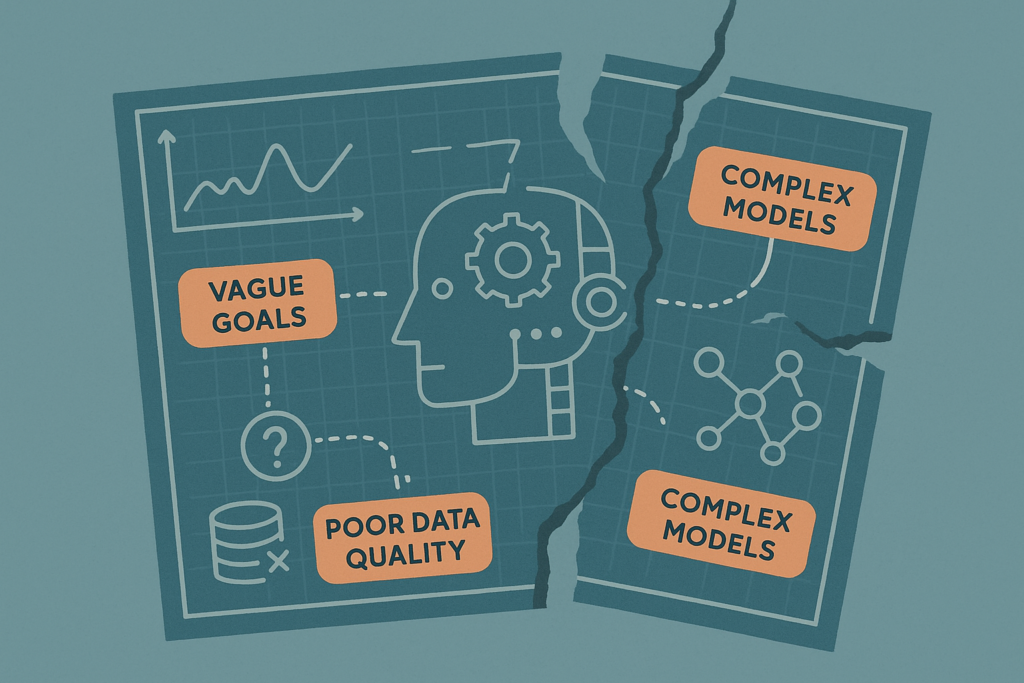
Key Takeaways
- Define Clear Goals: Use SMART criteria to set specific, measurable objectives.
- Data Quality Over Quantity: Prioritize clean, reliable data for training models.
- Start Simple: Begin with straightforward algorithms before scaling complexity.
- Plan for Production: Design for scalability and real-world conditions.
- Maintain Models: Automate retraining and monitor for data drift.
- Engage Stakeholders: Build trust through explainability and user training.
The Importance of Clear Goals
A vague vision can spell disaster for AI projects. Without clear, measurable goals, teams may develop solutions that don’t address real needs. For example, a pharmaceutical manufacturer aimed to “optimize the trial process” without specifying how, leading to irrelevant outcomes.
Setting SMART Objectives
To avoid such pitfalls, define specific, measurable objectives using SMART criteria:
- Specific
- Measurable
- Achievable
- Relevant
- Time-bound
Data Quality is Crucial
Data quality often trumps quantity in AI projects. A retail client with inconsistent sales data found their model failed in production despite good testing results.
Ensuring Data Quality
Invest in data cleaning and validation. Use tools for preprocessing and data validation to catch issues early.
Avoid Overcomplicating Models
Complex models aren’t always better. In healthcare, a simpler model matched the accuracy of a complex one while being faster and easier to interpret.
Starting Simple
Begin with simple algorithms to establish a baseline. Scale complexity only if necessary.
Prepare for Real-World Deployment
Models that work in testing may fail in production. An e-commerce recommendation engine struggled with peak traffic due to scalability issues.
Planning for Production
Design for scalability and monitor performance under realistic conditions to ensure reliability.
Continuous Model Maintenance
AI models require ongoing maintenance. A financial forecasting model degraded due to unmonitored data drift.
Automating Maintenance
Implement monitoring for data drift and automate retraining to keep models relevant.
Stakeholder Engagement is Key
Even flawless models can fail without stakeholder trust. A fraud detection model was ignored due to lack of user trust and training.
Building Trust
Use explainability tools and engage stakeholders early to foster trust and ensure successful adoption.
Closing Summary
Failed AI projects highlight the importance of clear goals, data quality, and stakeholder engagement. Businesses developing software can learn from these lessons to ensure their systems are robust and trusted.
Source: 6 proven lessons from the AI projects that broke before they scaled – venturebeat.com